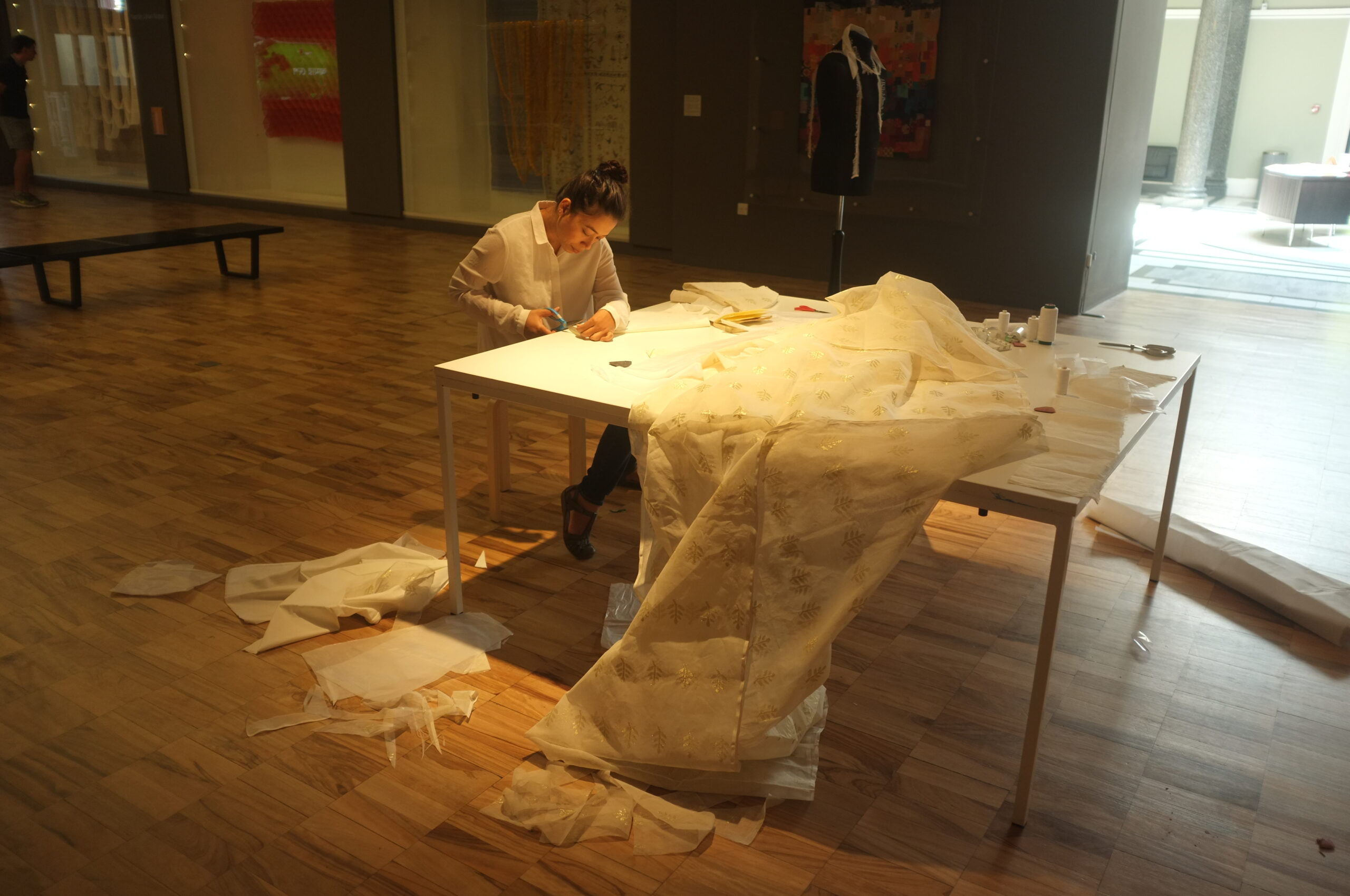
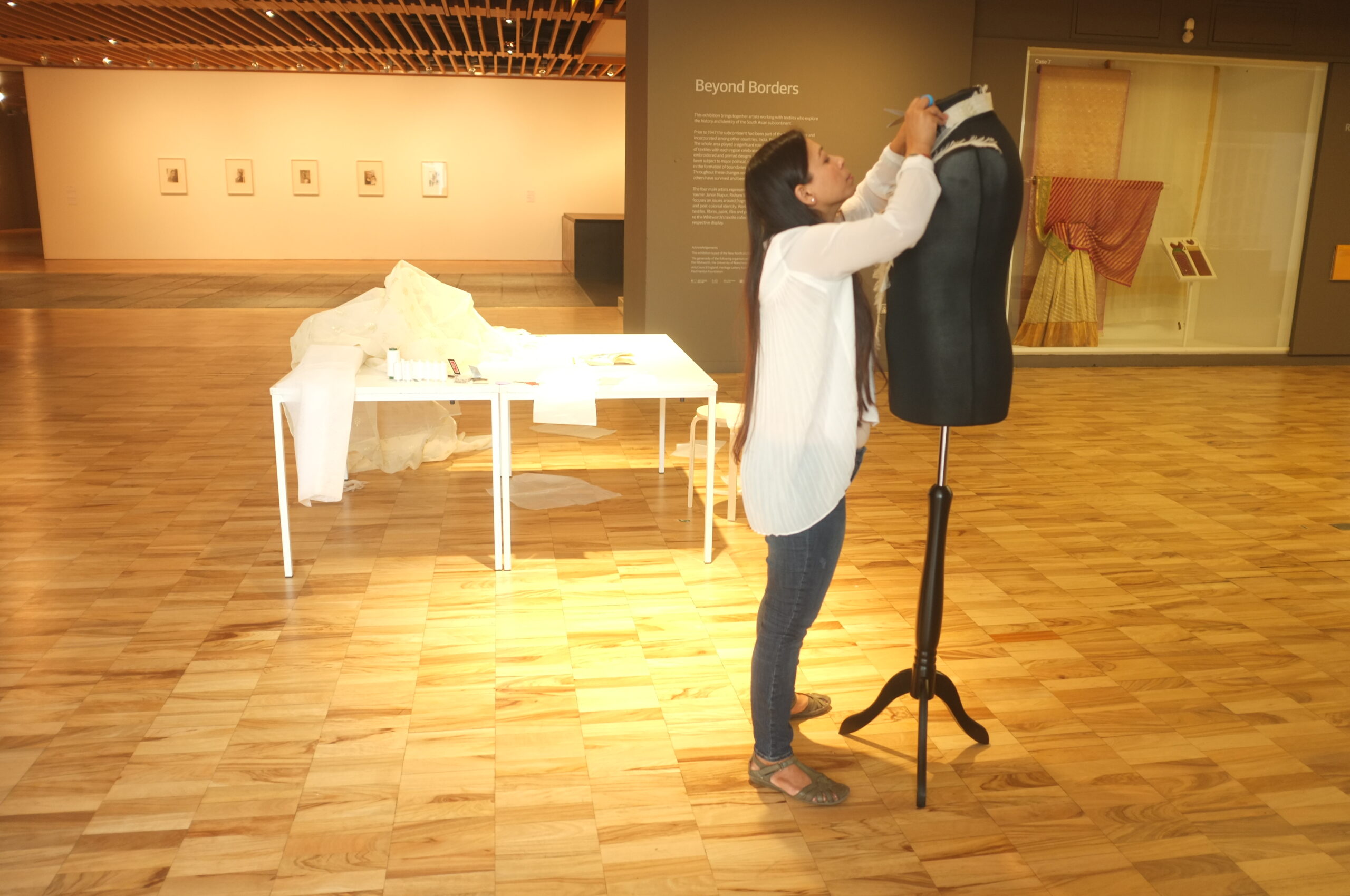
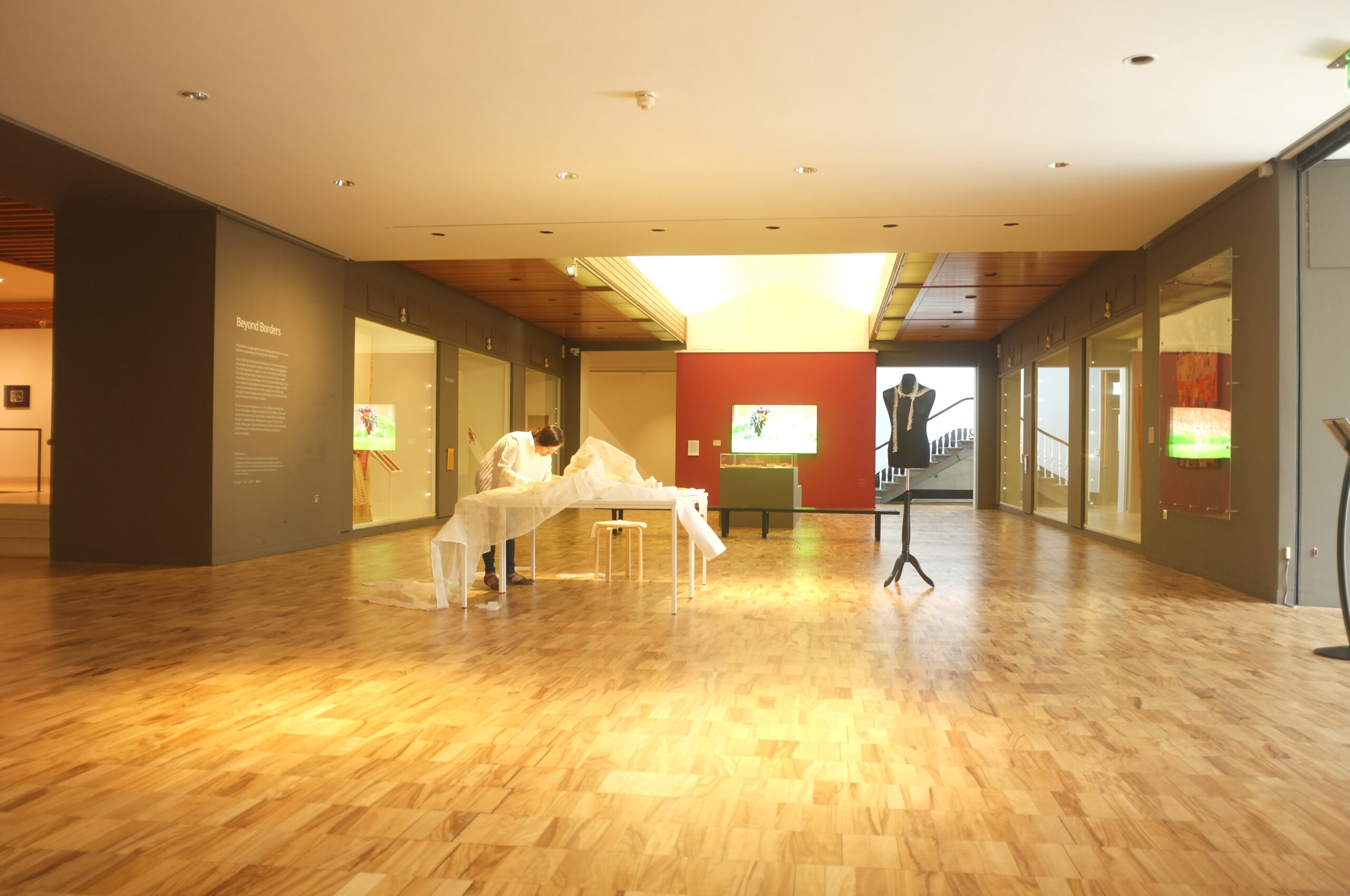
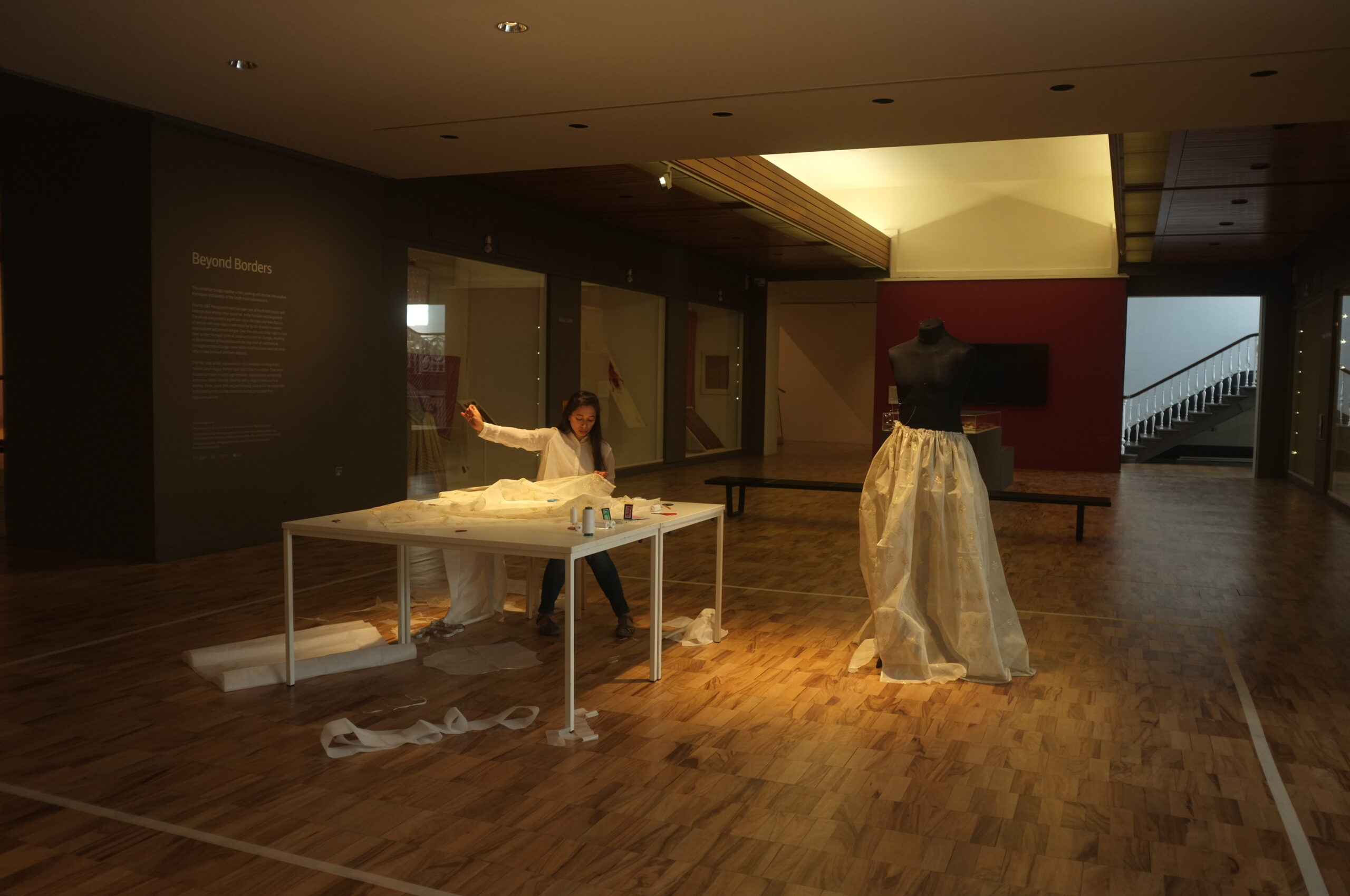
A Tailor is sewing the dress of Tipu Sultan
A two-day performance by Yasmin Jahan Nupur, a leading contemporary
artist from Bangladesh.
In this performance, Nupur uses specially handwoven muslin-jamdani as a
signifier of power and consumption embedded in the contested and violent
history of the subcontinent. A highly revered, translucent cotton cloth from
Bengal, muslin embellished with jamdani (woven pattern) has been celebrated
over the centuries for its mesmerising allure and feather-light texture, often
compared to moonlight or the morning dew. This fine cloth made from a
labour-intensive process historically adorned the richest of rulers in the
subcontinent and attracted a lucrative overseas trade.
This performance will take place alongside Nupur’s works on display in the
exhibition, Beyond Borders, connecting the rich and complex history of muslin
and jamdani. Growing up in Bangladesh Nupur was aware of how muslin had
been celebrated across the world but equally, was deeply affected by the
legacies and impact of British colonialism. “There are entire generations of
Bengali men and women who have grown up with legendary stories of how
the British cut off the thumbs of weavers so they could no longer produce
muslin and were forced to buy British goods. This history constantly hurts
me”.
The 18 th century saw significant political, social and economic changes to the
subcontinent. It was a time when the area, which once incorporated Pakistan
and Bangladesh, (amongst other South Asian countries) was under the
administrative control of the British East India Company. Numerous battles
were fought and aggressive advances were made to dominate and control
trade.
During this time, the British East India Company secured trading rights in
Bengal, establishing a factory in Dhaka and many others in Bengal. They
strictly controlled the production of muslin. By the end of the 18 th century the
production was in decline. Many factors contributed to this such as famine,
poverty, taxes and competition from British goods.
In the late 18 th century Tipu Sultan was known as a fearless and great ruler of
Mysore in Southern India, resisting the advances of the British East India
Company. During his reign (1782-99) he built magnificent palaces and
amassed a great fortune in jewellery, precious gems and ornaments. He was
also known for his love of fine clothing including the finest muslins and
jamdanis from Bengal. In 1799 Tipu Sultan was killed in the Battle of
Srirangapatna (Seringapatam) by the British East India Company which was
heralded by them as a triumph. The officers subsequently looted his palaces,
resulting in colonial booty eventually making its way into a great number of
British national collections where they can still be seen today.
Nupur uses muslin/ jamdani as a medium to locate and express these
individual and collective memories across time and place. This fine texture
conceals and reveals, dissects and unites the space we occupy. The act of
weaving is meditative, physical and emotional. The entire body of the weaver
is invested into its formation. The fineness of muslin forms a second skin,
connecting our bodies and spirit with the woven structures of the universe.
Situating the performance in the textile gallery at the Whitworth, Nupur
translates these conflicted histories, working silently and industriously,
oscillating between the absence and presence, the marginalised craft-maker
and glorified victor.
Part of the New North and South programme.
Read More
Part of the New North and South programme.