Let Me Get You a Nice Cup of Tea
Tea originated in China, where it was first valued for its medicinal and spiritual qualities. Buddhist and Taoist
monks drank tea to support meditation, drawn to its quiet strength and ability to sharpen attention. Over
centuries, tea crossed borders and belief systems, eventually becoming one of the most widely consumed
beverages in the world, second only to water.
Europe’s fascination with tea in the early modern period transformed it into a global commodity. As Russians,
Dutch, and British traders competed for control, tea became entangled with imperial ambition. In the 1830s, the
British Empire began cultivating tea in India, initially using imported Chinese plants in Assam. Through the
East India Company, Britain monopolized the tea trade, converting Indian land and labor into profit. By 1888,
more tea was imported to Britain from India than from China. Tea fueled trade routes, colonial violence, and
resistance—from the American Revolution to the Opium Wars—quietly shaping global histories while
appearing harmless and domestic.
Yet tea is more than a colonial product. In South Asia, it became woven into everyday life. In Bangladesh and
India, tea is shared in homes and roadside stalls, marking pauses in the day and moments of connection. These
rituals have largely been shaped and sustained by women, who transformed tea time into a space for hospitality,
storytelling, moral instruction, and care across generations.
As tea traveled, it absorbed local knowledge and taste. Cardamom, cinnamon, ginger, and sugar gave rise to
masala chai and countless regional variations mint tea, chili tea, tamarind tea. In Bangladesh, tea shops become
informal public forums where debate, grief, gossip, and laughter coexist. Tea calls people to stop, gather, and
speak.
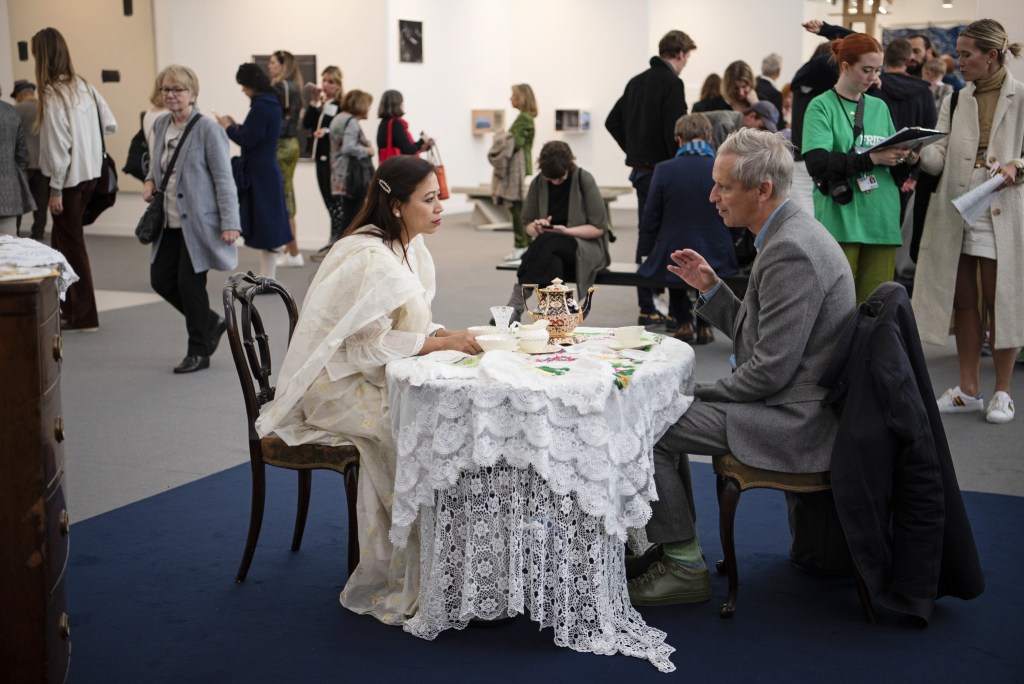
This project takes the form of a public tea party performance. Drawing from the structure of British afternoon
tea, I reconfigured it into an intimate, reflective gathering rooted in shared presence rather than hierarchy. I
harvested and prepared the tea myself, grounding the work in labor, care, and intention. Serving tea becomes a
performative act one that carries histories of colonialism, domestic labor, and resistance while opening space for
dialogue.
Through conversation over tea, participants reflect on what we consume, where it comes from, and the invisible
hands and memories it contains. The tea party becomes a site of cultural memory and quiet transformation.
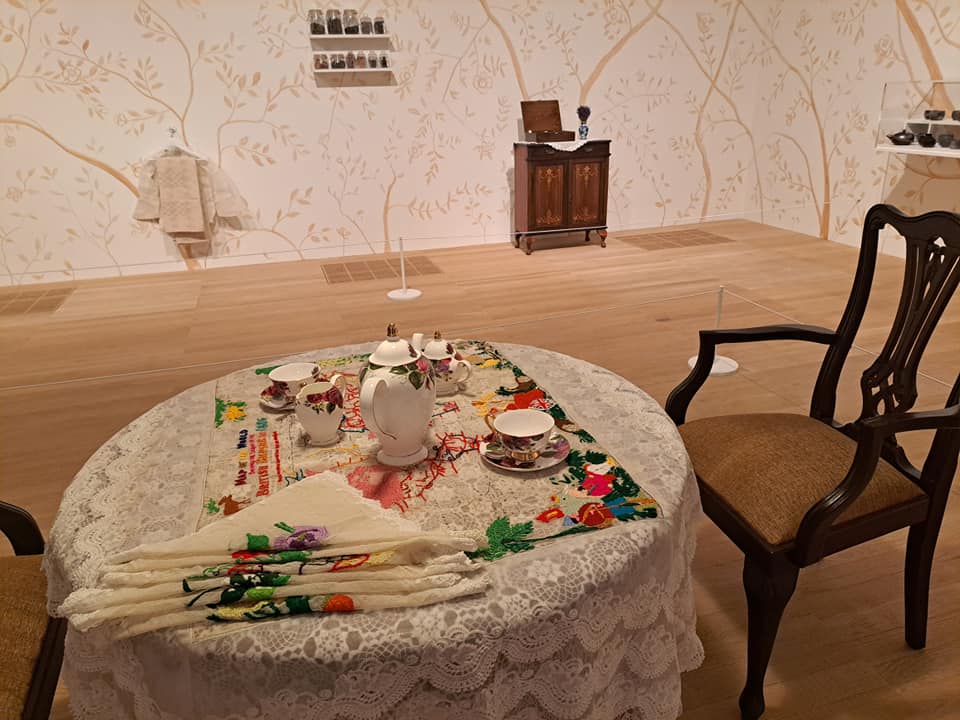
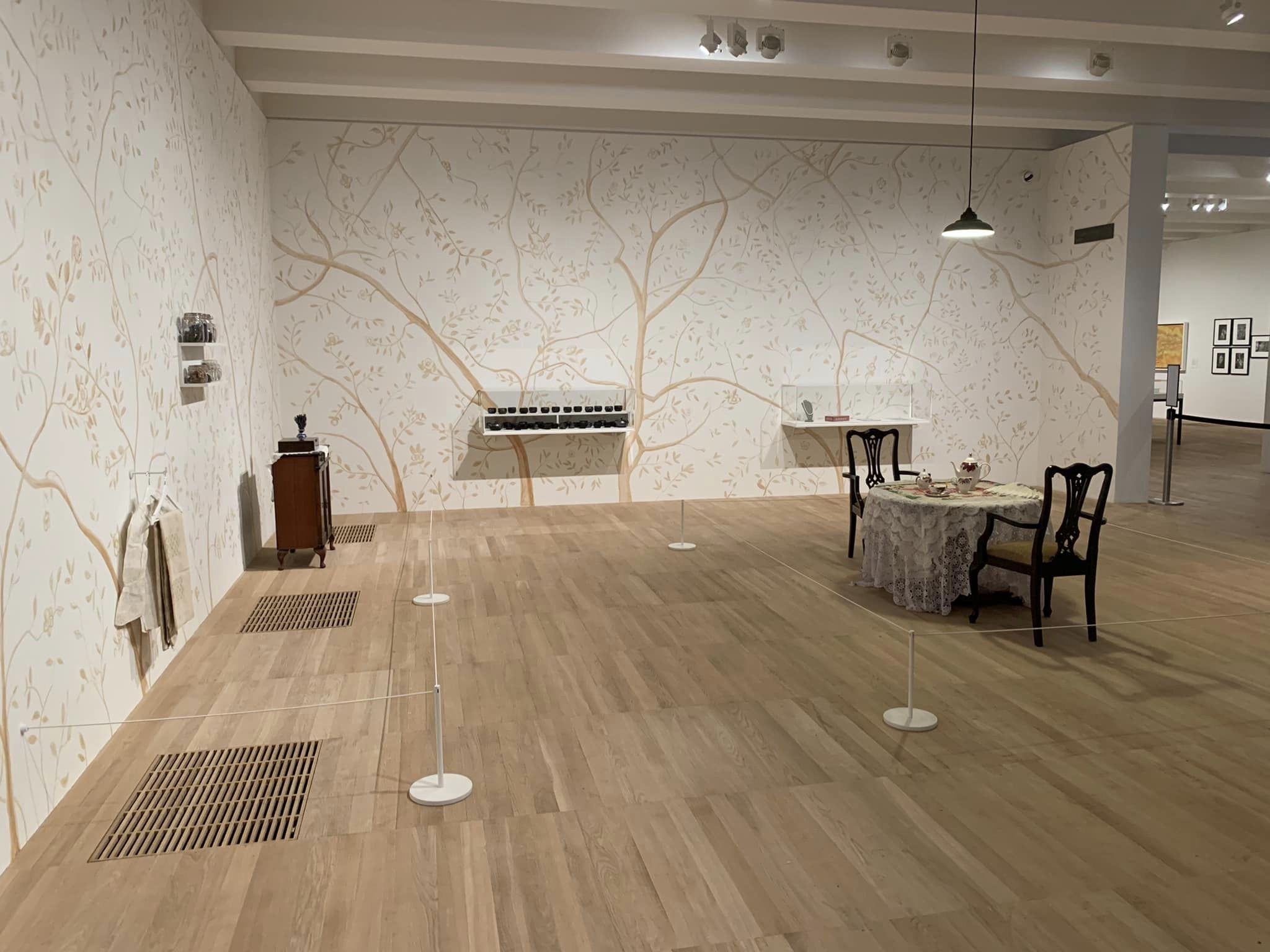
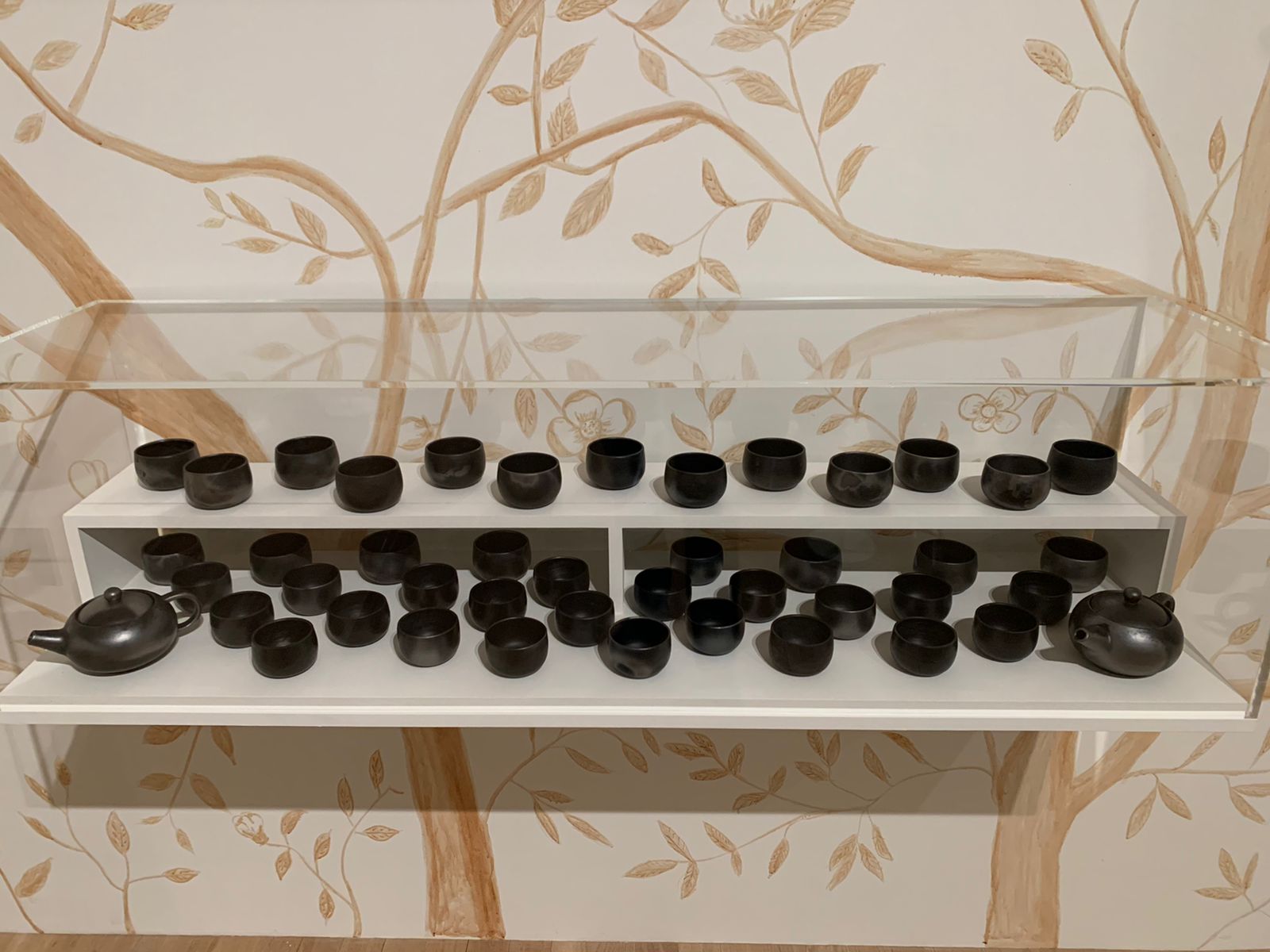
Materials: Traditional Chinese teacups and saucers, antique teapot, handwoven tablecloths, wooden table and
chairs, antique cabinet, eleven hand-harvested tea blends (traditional and experimental), Jamdani costume,
wallpaper drawn with tea pigmen
Read More
Performance” “2019–2023
London Frieze 2019; Dhaka Art Summit 2020; Tate Modern 2022–23″ “London, UK; Dhaka, Bangladesh
Exhibit320 / Peabody Essex Museum commission”