Crossing the Border, Being together
The adoption of national identity in terms of historical development has commonly been the result of a response
by an influential group or groups that is unsatisfied with traditional identities due to inconsistency between their
defined social order and the experience of that social order by its members, ensuing in a situation of social
instability that nationalists seek to resolve. This development may be the result of internal structural issues or
the result of resentment by an existing group or groups towards other communities, especially foreign powers
that are or are deemed to be controlling them. In mid nineteenth century, three institutions of power have
changed their form and function as the colonized zones entered the age of mechanical reproduction. These three
institutions were the census, the map, and the museum together.
Now nationalism is a political ideology that involves a strong identification of a group of individuals with a
nation. History is a way that used the past to validate own beliefs. Histories are being corporate by nationalism,
map, war, religion, globalization, political and identity.
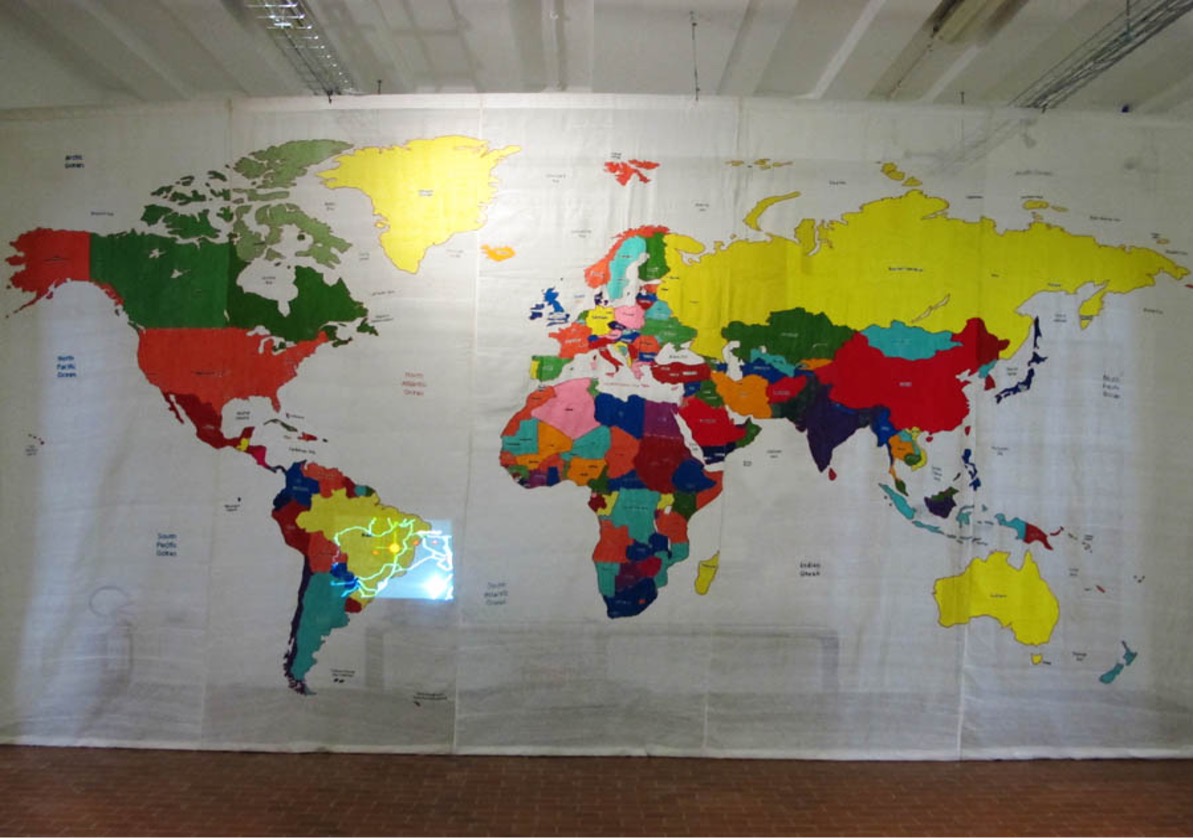
Every country has been defined by a map. Maps of the world generally focus either on 'political' features or on
'physical' features. Political maps emphasize territorial boundaries and human settlement.
Every country divine by a line which call border. By politically we have to maintain the border. We cannot
cross this line. Ever some countries are united but politically it has been changed and made a new map. This
map includes in world map. As per the new map people are divine a zone, a country, a nation and have to
maintain the line or border.
Sometime these lines are going in the middle of the house. One part of this house is belonging one country and
another part is belong to the other country. Now we all have our own national flags, national anthems, and other
symbols of national identity which are commonly considered highly important symbols of the national
community. Nationalism is commonly defined as a love for one's country. Throughout history, large groups of
people who share a cultural identity (language, customs, history) have felt the pulling power of nationalistic
feeling. The spirit of independence also includes the belief that one's nation is better off as an independent state.
Independency is defined as a nation governing itself independently from a centralized point. Revolutions, wars,
ethnic tension, and other conflicts of varying degrees have occurred throughout history because of a love for
one's country. The spirit of nationalism has shaped the histories and destinies of many countries. Nationalism
can unite people into cohesive, stable nations. But people have to habit to identifying oneself with a single
nation.
Through my project I can share and decentralize my work through history, socio-economic culture and wider
community committed to the principles of human dignity and equality.
Read More
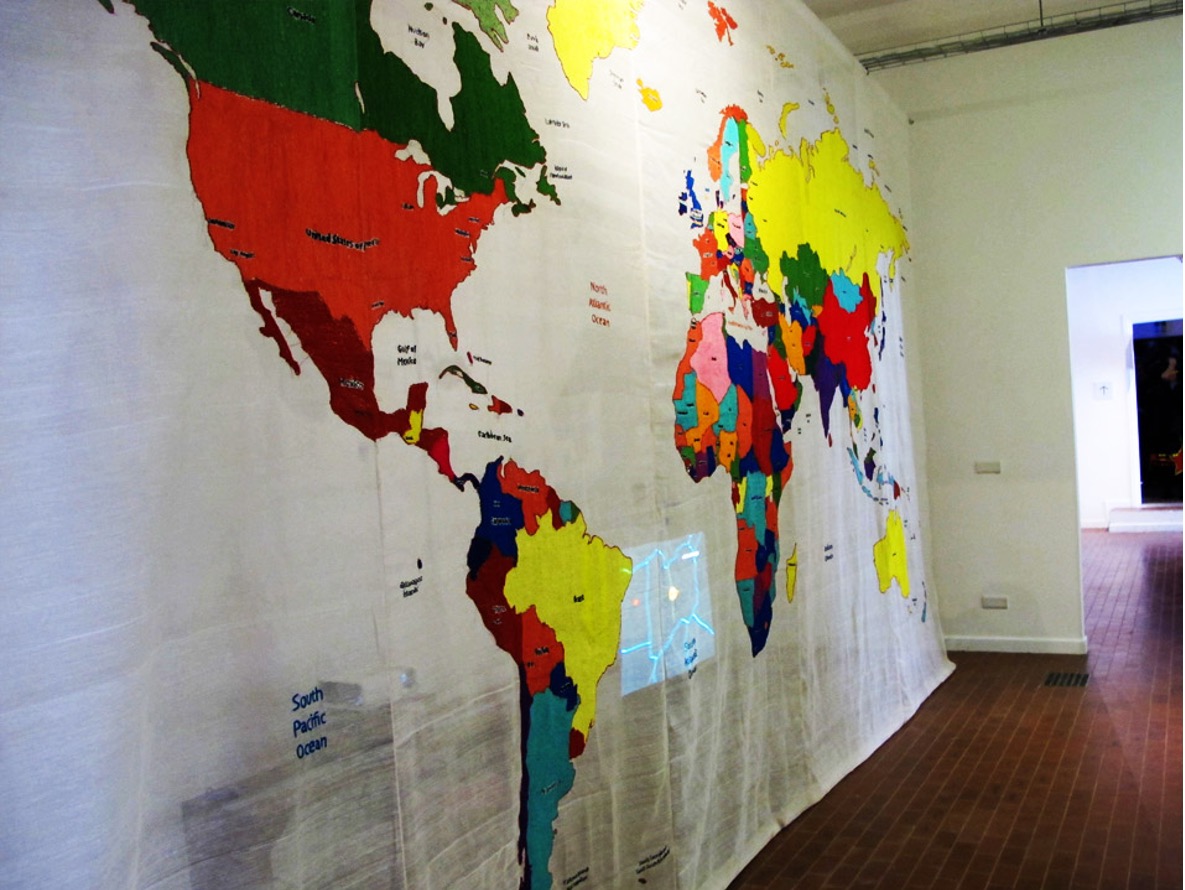
video, installation. 2013 and ongoing project, exhibited also 2017, 2024
Material: Muslin (Jamdani) fabric. For Embroidery –needle, thread, red cotton, Wooden structure (8th
ft), one electronic machinery motor. (it helps to moving projector).
55th Venice Biennale, Venice, Italy.2013 The National Pavilion of Bangladesh.